Grammatical theme
A grammatical theme is a kind of film theme that consists of 2 halves, which can respectively be categorized as a “statement and response” or simply a “beginning and end”.
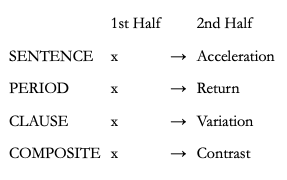
Broadly speaking, grammatical theme forms can be determined by the relationship of the second half to the first. The 4 relationships are:
- The second half accelerates (Sentence)
- The second half returns to the opening idea (Period)
- The second half varies the preceding idea (Clause)
- The second half contrasts with the preceding idea (Composite)
Now within the first half, we can define 3 relationships between the first idea and the second idea:
- “Similar”
- “Varied”
- “Different”
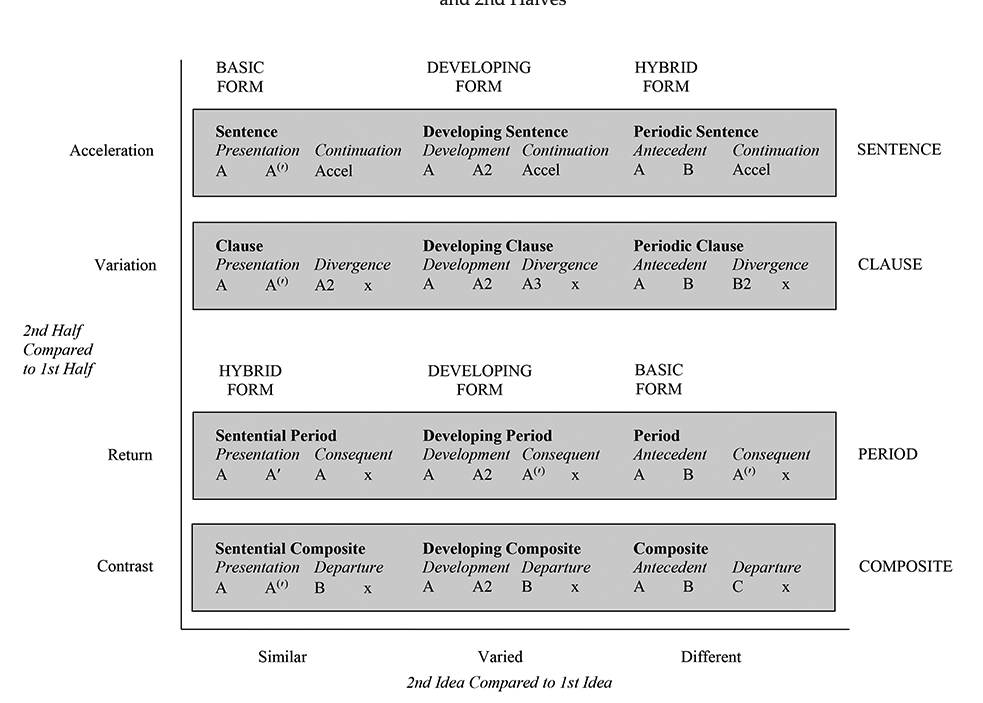
When we combine all of the potential relationships between the first and second halves with the potential relationships between the first and second ideas, we get 12 different kinds of grammatical themes:
- Sentence (Acceleration + Similar)
- Developing Sentence (Acceleration + Varied)
- Periodic Sentence (Acceleration + Different)
- Period (Return + Different)
- Developing Period (Return + Varied)
- Sentential Period (Return + Similar)
- Clause (Variation + Similar)
- Developing Clause (Variation + Varied)
- Periodic Clause (Variation + Different)
- Composite (Contrast + Different)
- Developing Composite (Contrast + Varied)
- Sentential Composite (Contrast + Similar)
#🔗