The sentence as functions
Caplin Ahead!
Link to originalThe information on this page may be skewed – click here for details.
The info on this page is either entirely based on or mostly based on the content published in caplin-2013 or caplin-1998. Caplin is considered to be responsible for reviving interest in the analysis of form in North American music theory.
While Caplin’s impact cannot be understated, it is worth understanding that his 1998 work (and his 2013 followup) are focused on Classical music: particularly the works of Haydn, Beethoven, and Mozart. It is important to not assume other styles of music (both preceding and following the classical era, or music in other parts of the world) follow these same conventions. Music theory is descriptive, not prescriptive, and so the theory you see describing what was common in the Classical era may not apply to anything else.
The sentence as a theme type was incessantly used in the Classical era and is described by Caplin as the most important theme type in Classical music[1]. However, in many colloquial cases, the sentence is often described using its simple definition, focusing on the structure of the sentence.
Using the simple sentence will not fully explain cases such as the following:
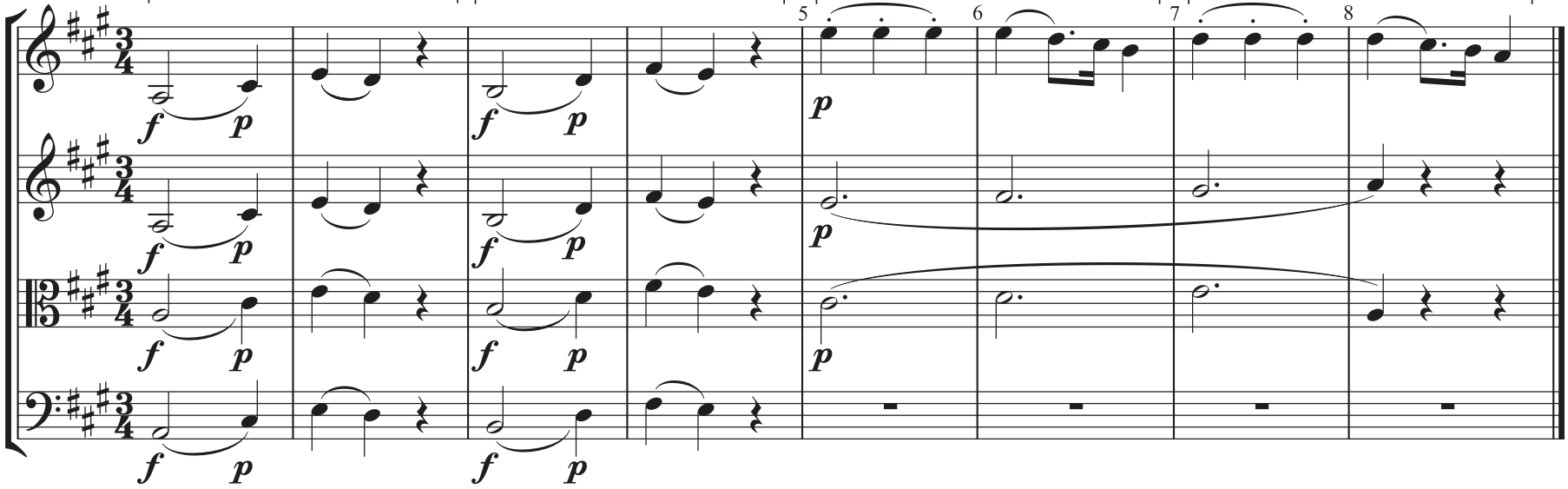
Mozart, String Quartet in A, K. 464, ii, 1–8. From caplin-2013 p.63.
Understanding the functions of the sentence will create a framework that allows one to analyze existing themes in Classical music (and other styles) that are either simple sentences or not.
The sentence is made up of 3 functions, executed in this order:
Simply put: a phrase represents a kind of “grouping structure” whereas each of these functions convey some sort of “feeling in time”.
References:
[1]: caplin-2013 p.33