Musical clause
Clause (musical theme)
A clause is a kind of grammatical theme defined and described by Richards.1 It can be split up into 2 phrases: the presentation and the divergence.
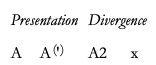
It's similar to a sentence in that the presentation takes the same form.[citation needed] It's also similar to a period in that the second phrase has some sort of relationship to the opening basic idea.[citation needed] However, the difference is that the second phrase's beginning idea is more different than the second idea in the first phrase.[citation needed] That is, A' is more similar to A than A2 is. (Richards calls A2 a "developing idea".)1 It should not feel like a return to A.
Some ways to go about writing A2:
- Different harmony (to move away from the presentation)
- Very similar rhythm
- Similar contour
- Similar intervals
Examples
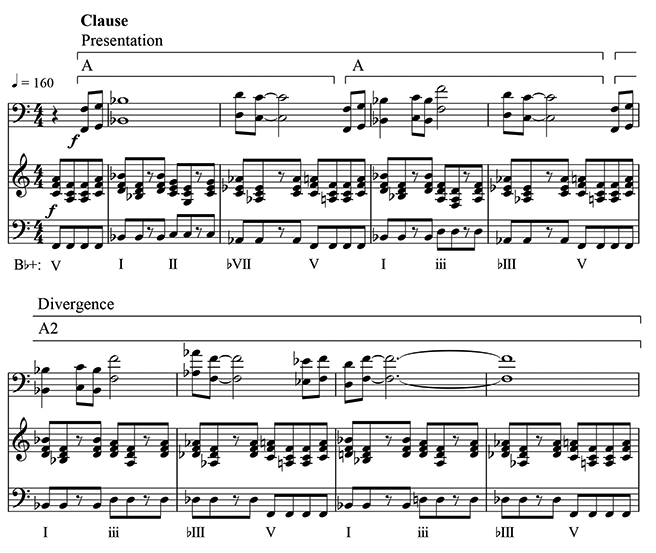
The Good, The Bad, and the Ugly: Main Theme
A2 retains same motif, but very different harmony.
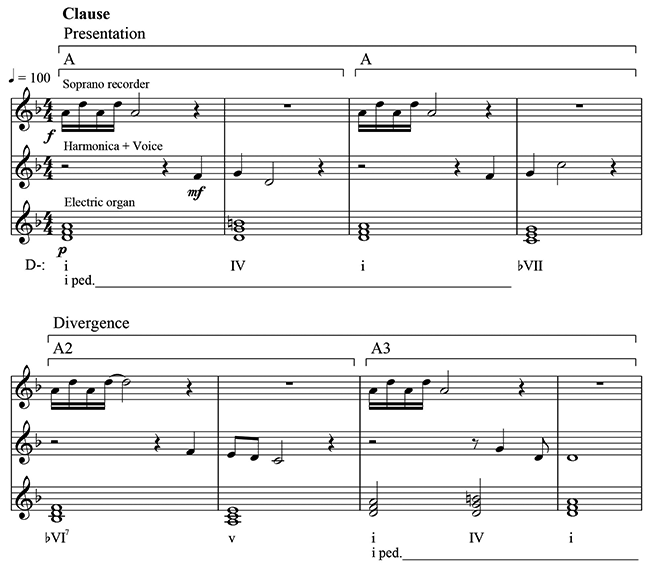
Gone with the Wind: Main Theme
A2:
- different harmony (ish)
- slight melodic changes
- different pitch level
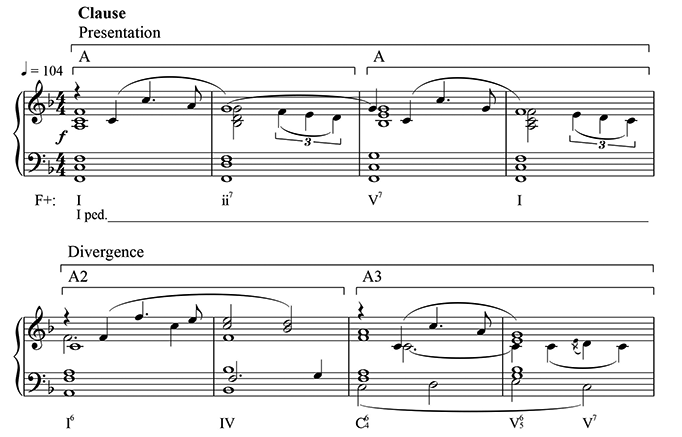
The Accidental Tourist: Main Theme
A2:
- drastic harmony change
- harmonic rhythm increases (but melody stays very similar)
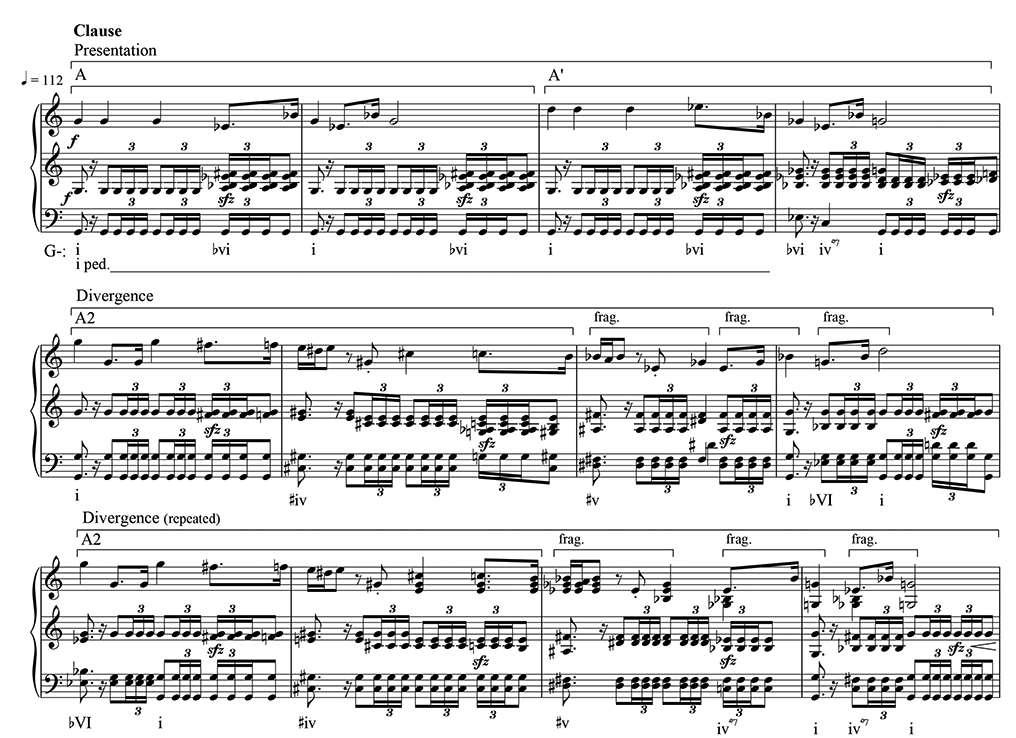
Imperial March
This one has a repeated divergence phrase. A2 is related to A through the "dotted 8th + 16th" rhythm.
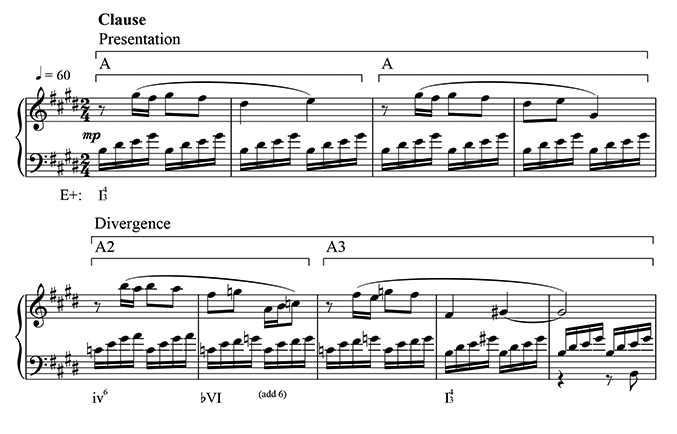
The Big Country: Raid Theme
A2 has a similar melody but has a climax on Ab.