Pulse amplitude modulation
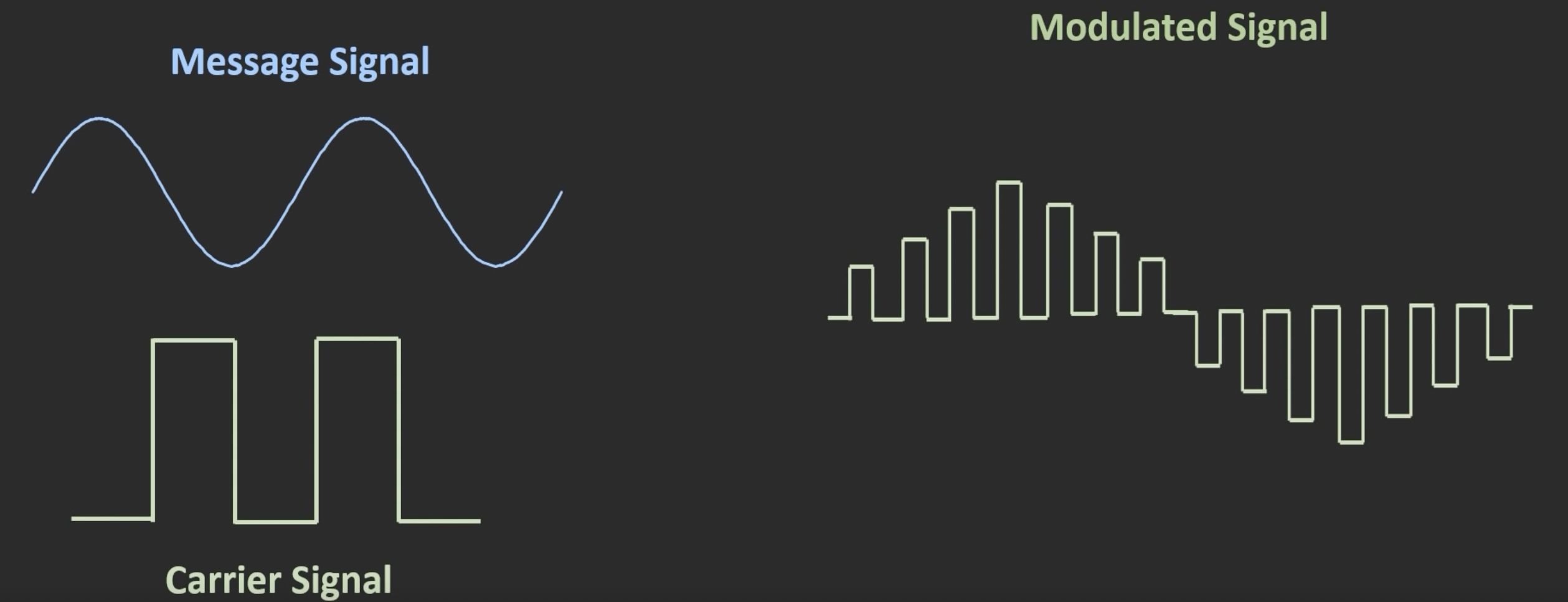
Pulse amplitude modulation (PAM) is a kind of modulation where the amplitude of a regular pulse train follows an analog signal. Each pulse's height equals the signal's value at that instant.
The carrier is a pulse wave and the modulating signal is the analog audio. The result is still analog: pulse heights can take any value. It only becomes digital once each height is quantized and stored as a binary code, which is pulse code modulation (PCM).
In audio, PAM is the intermediate stage of sampling when recording onto a computer. See below for what this looks like.
Link.